
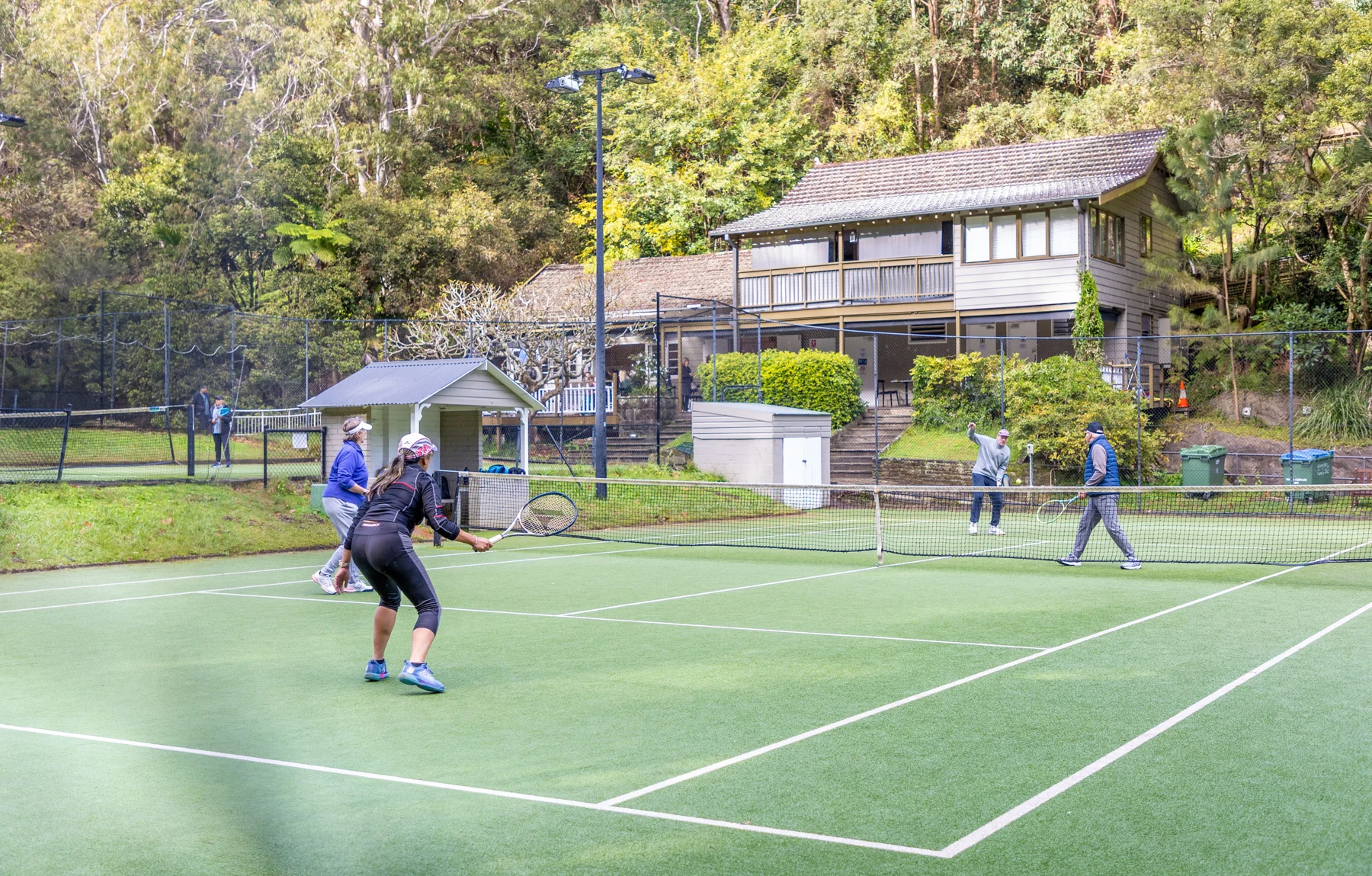
What a score leaves out
A score tells you who won the points that mattered. It cannot tell you who made time to be there, who returned after years away, or who spent the last month trying to understand a shot that finally felt right. Those are not consolation prizes. They are part of why a game can matter long after a match is over.
Competition deserves its place. Keeping score gives a rally consequence and asks whether a decision holds up when the other person has a say. But when results become the only language available, much of the playing life disappears from the conversation. The beginner has to wait to be good before feeling legitimate. The regular player can mistake an ordinary loss for a wasted evening.
There is room for different ambitions
The person training for a tournament and the person arranging Sunday doubles do not need the same plan. Neither has to borrow the other’s ambition to belong. Some players enjoy the detail of learning a stroke. Others want the pressure of a close set, the familiar company, or a reason to leave the desk and be outside.
Those motives can change. A serious junior may later choose social tennis. An adult who began for company may become fascinated by technique. A parent may spend years beside the court before picking up a racket. A tennis culture worth joining should make those changes feel ordinary rather than like a loss of status.
Make room for the people who keep it going
Tennis is often described through individual achievement. Yet most playing lives depend on other people: someone who books the court, returns a message, feeds another ball, explains an unfamiliar format, or agrees to play at a manageable pace. Reliability rarely makes the highlight reel. Without it, the next session may never happen.
This gives the ordinary player a role in the future of the game. You can make an introduction, invite the returning player, explain how the court booking works, or give a friend a practice they enjoy enough to repeat. None of those acts needs a ranking. They make the game easier to enter and more rewarding to stay with.
What we mean by Stay Tennis
For GEN Tennis, Stay Tennis is a commitment to that wider playing life. We want to follow the competition, ask better questions about development, enjoy the design and rituals around the court, and hear from the people who make tennis their own. You can care deeply about getting better without treating every session as a verdict.
Think about your last worthwhile day on court. Perhaps you won. Perhaps you did not. What made you want another one? That is a question with room for far more answers than a scoreboard can hold.
Our editorial standards · Questions or corrections? Contact the editor.